
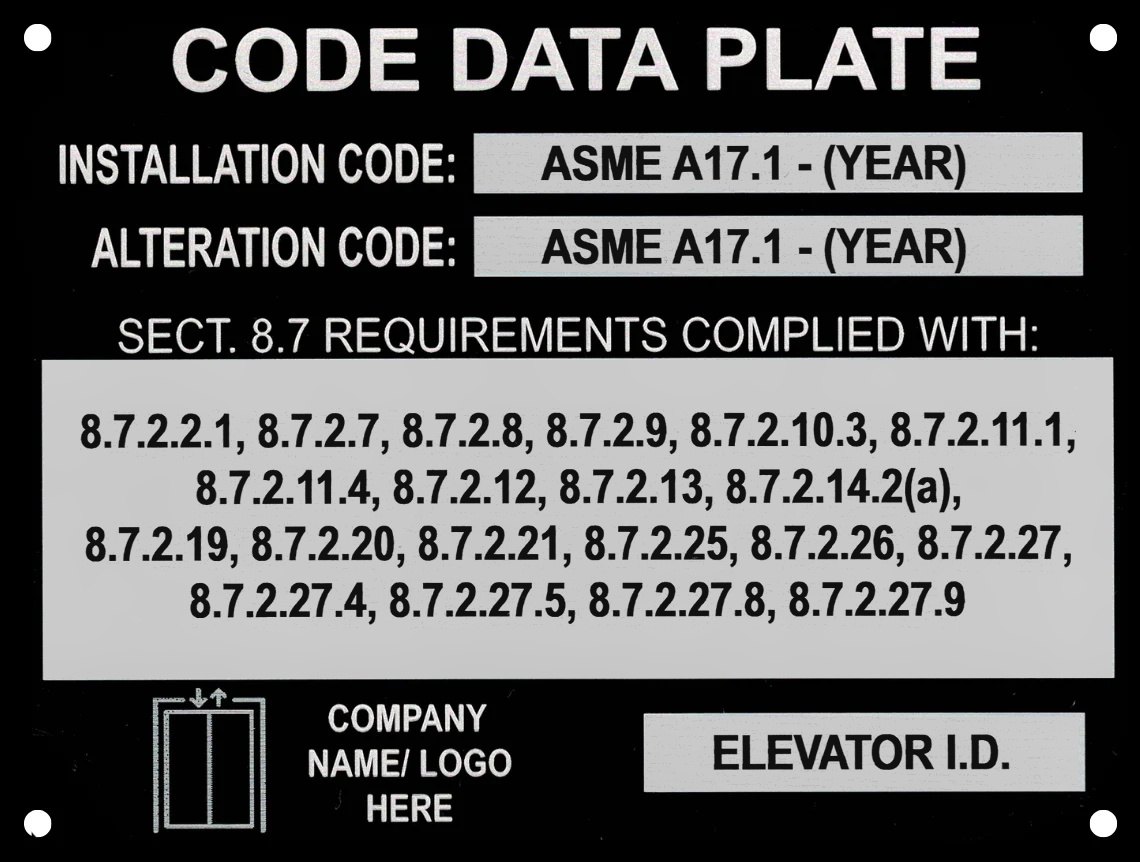
A failed final inspection over a missing or incorrect alteration plate is one of the most avoidable setbacks on a modernization. The re-inspection has to be scheduled and paid for, the crew makes a return trip, and turnover to the owner is delayed, sometimes by weeks. Don't let one small plate cost you thousands. Get it right the first time.
An alteration plate is one piece of the job an inspector always looks for, and it is one of the most common items written up. Not because the work was wrong, but because the plate was missing, incomplete or referenced the wrong code edition. Here is what the plate has to say and why each line matters.
Why the plate exists
ASME A17.1 Section 8.7 governs alterations. When a unit is altered, the altered parts must comply with the code in effect at the time of the alteration, while the rest of the unit remains under the code it was installed to, plus ASME A17.3 where the authority having jurisdiction has adopted it. The alteration plate is the permanent record of that split: which edition the unit was built to, which edition the alteration followed, and exactly which Section 8.7 requirements were applied. Without it, the next inspector, mechanic or consultant has no way to know what standard governs what.
The required contents
Section 8.7.1.8 requires a Code Data Plate complying with Section 8.9 whenever an alteration is made. Under 8.9.1, the plate on an altered unit must show:
- Installation code. The code and edition in effect when the unit was originally installed, with the year. If the original data plate is missing, this becomes a research question, and the answer belongs on the new plate.
- Alteration code. The code and edition in effect on the date of the alteration. For work being done now, that is normally A17.1-2022 or whichever edition the jurisdiction has adopted.
- The Section 8.7 requirements that apply. The specific subsections that applied to this alteration, listed by number: 8.7.2.1, 8.7.2.7, 8.7.2.27.4 and so on. This is the line most often done wrong. A plate that just says "Section 8.7" tells the inspector nothing.
- SIL-rated devices, where used. If the installation or alteration includes SIL-rated devices, the plate must say so, or a supplementary plate mounted next to it must.
Plates should carry the car number or unit designation, so the plate can be matched to the equipment in a bank, as well as the name and logo of the company that did the work. Neither is required by 8.9.1, but inspectors and the next contractor expect to see them.
How the plate must be made and mounted (8.9.2 and 8.9.3)
- Location. Securely attached in plain view on the mainline disconnect or the controller. It may go inside the controller if it is clearly visible when the controller door is open.
- Lettering size. At least 3.2 mm (1/8 in.) high.
- Permanent marking. Stamped, etched, cast or otherwise marked so it stays legible for good.
- Outside the controller. Either a durable surface that resists paint, adhesives, oil and grease and can be wiped clean, or lettering raised or recessed at least 0.8 mm (1/32 in.) with strokes at least 0.5 mm (0.02 in.) wide.
- Harsh environments. Plates exposed to weather or chemicals need added protection.
What inspectors check
Four things get flagged repeatedly:
- Wrong edition. The plate references the edition the mechanic remembers rather than the one the jurisdiction had adopted on the permit date. Jurisdictions lag the latest A17.1 by anywhere from one to ten years, and the plate must match the adopted edition, not the newest one.
- Missing subsections. The 8.7 list is left blank, abbreviated or copied from a previous job. The list has to reflect this alteration.
- Multiple alterations, one plate. A unit altered more than once needs a record of each. Either the original alteration plate is replaced with one listing all alterations by date, or a multi-year plate with space for additional entries is used from the start.
- Non-durable marking. Printed labels, engraved plastic and screen-printed aluminum fade, peel or wear in machine-room conditions. Inspectors can and do reject a plate they cannot read.
Getting it right the first time
The reliable approach is to settle the plate contents when the permit is pulled, not after the work is done. Confirm the adopted edition with the authority having jurisdiction, list the 8.7 subsections against the scope of work, and order the plate before the final inspection is scheduled. A plate that arrives after the inspector does is a return trip.
Ordering the plate is where many of these mistakes start. Working out which Section 8.7 subsections apply to the alterations made, then making sure every one ends up correctly on the plate, often means drawings, quotes and back-and-forth with a supplier. CodePlates.com makes that step easy. The alteration-plate order form lists every Section 8.7 subsection in code order, so the contractor checks the ones that apply, enters the installation and alteration editions, and uploads a logo once. Not sure which subsections apply? Codey, our online code expert, can assist with orders, help check for errors and answer any of your code-related questions 24/7. Plates are laser-etched on black anodized aluminum, so the marking lasts the life of the equipment, and standard orders ship in three to four business days. Learn more at www.codeplates.com.
CabCraft Interiors, Inc. manufactures custom elevator cab shells and interiors on Maryland's Eastern Shore and operates CodePlates.com. This article does not constitute code interpretation; always confirm requirements with the authority having jurisdiction.
Recent news

CabCraft.com Just Took Things to the Next Level
Pick a pre-engineered interior system, specify your finishes, get fast, accurate pricing — plus custom cab shells and a free Spec Writer for design professionals.
Read more →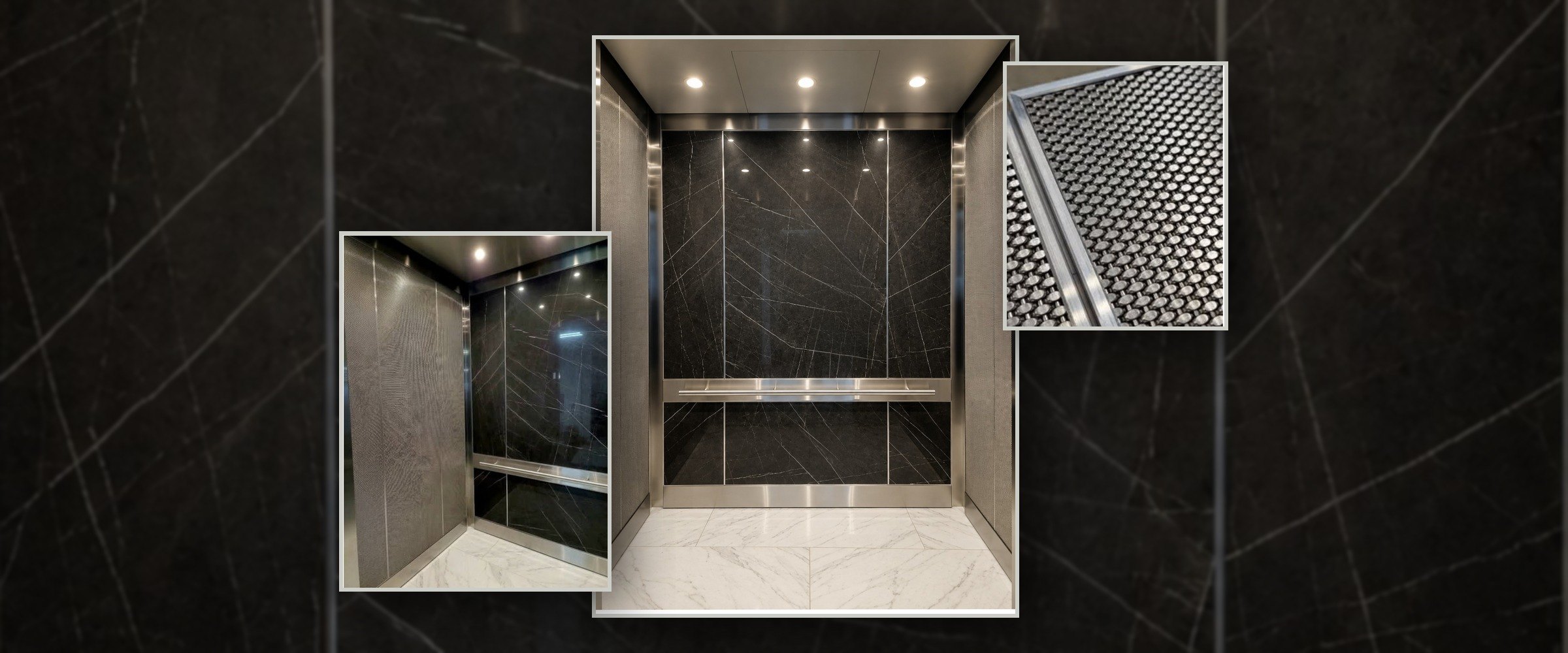
The Case for Pre-Engineered Elevator Interiors
Why a pre-engineered interior package is the better specification whenever it fits the architect's design intent — known cost, predictable weight, settled code and a one-day install.
Read more →
CodePlates.com Introduces Codey, an Online AI Elevator Code Expert
Codey answers questions on ASME A17.1-2022 and the A17.2-2023 inspection guide, builds the alteration checklist and helps check a plate for errors before it is ordered.
Read more →