
Elevator Interior Care & Maintenance Guide
Standardized procedures for the routine care, cleaning and long-term maintenance of your elevator cab interior — laminates, decorative metals, glass and mirror, stone and porcelain, and protection pads — with a recommended maintenance schedule.
Proper maintenance protects the aesthetic quality of your cab, extends the service life of all interior finishes, and ensures a clean, professional environment for passengers.
Following these guidelines will also protect your warranty coverage and prevent damage that could require costly refinishing or component replacement. For additional care and maintenance guidance, please visit the manufacturer's website or contact CabCraft Interiors for assistance.
General safety guidelines
- Always read product labels on all cleaning agents before use.
- Test any new cleaning product on a small, inconspicuous area first.
- Use only clean, soft cloths, microfiber towels, or approved applicators.
- Never mix cleaning chemicals — always rinse thoroughly between products.
- Ensure adequate ventilation when using any chemical cleaners in the cab.
- Power down the cab lighting or take the unit out of service for deep cleaning if required.
- Report any damaged surfaces, loose panels, or structural concerns to your maintenance supervisor immediately.
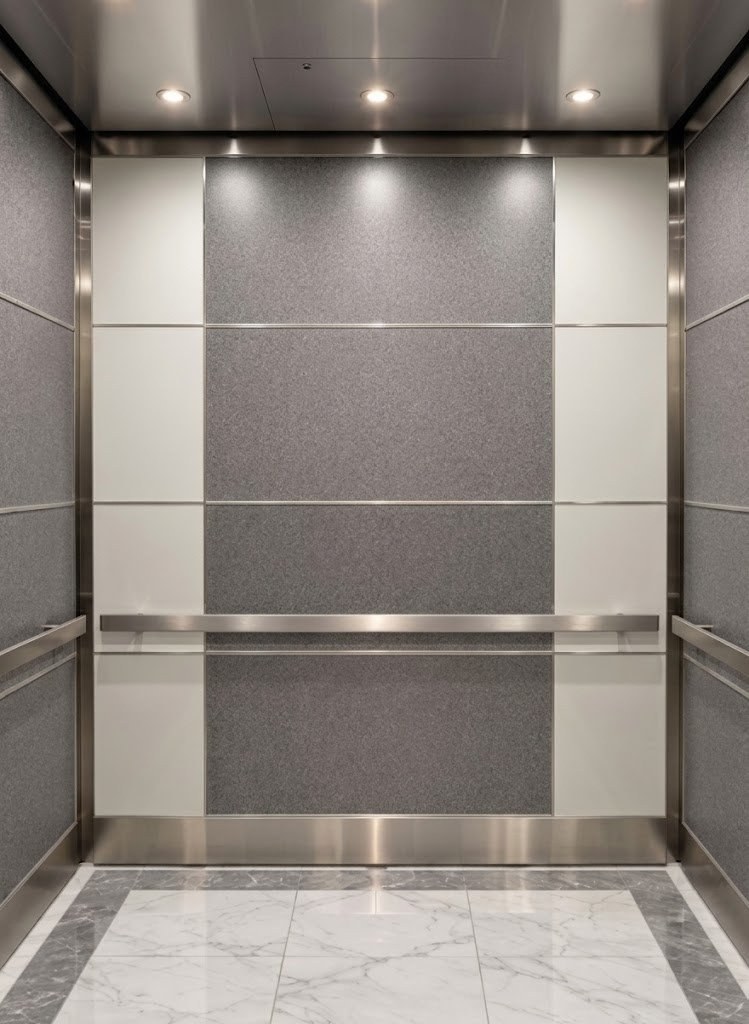
Laminates
Routine cleaning
- Wipe surfaces with a clean, soft, damp cloth or sponge and a mild soap or detergent to remove dust and light soiling.
- Rinse thoroughly with warm water and wipe dry.
Recommended general cleaners: Formula 409, Fantastik, Windex, liquid dish soap, Mr. Clean
Removing stubborn stains
- Adhesive residue, ink, or marker stains:
- Apply a small amount of isopropyl alcohol (70%) to a clean, non-abrasive cloth.
- Clean using a rotating motion.
- Do not allow cleaning solutions to pool or remain on laminate surfaces for extended periods.
- Rinse with water ensuring all cleanser is removed from the surface and wipe dry.
- Tougher stains:
- Acetone or a mixture of baking soda and water can be applied.
- A soft-bristled brush can be used on more difficult stains (do not use if the laminate has a gloss finish).
✓ Recommended
- Use mild soap or recommended cleaners
- Use soft cloths or microfiber towels
- Wipe dry immediately after cleaning
- Address stains and marks promptly
- Use a soft-bristled brush for stubborn debris
✕ Avoid
- Abrasive pads, steel wool, or scouring powder
- Hydrochloric, phosphoric, sulfuric or hydrofluoric acid, or sodium hydroxide
- Standing water on seams or edges
- Excessive pressure that may chip edges
- Sharp metal tools to remove residue
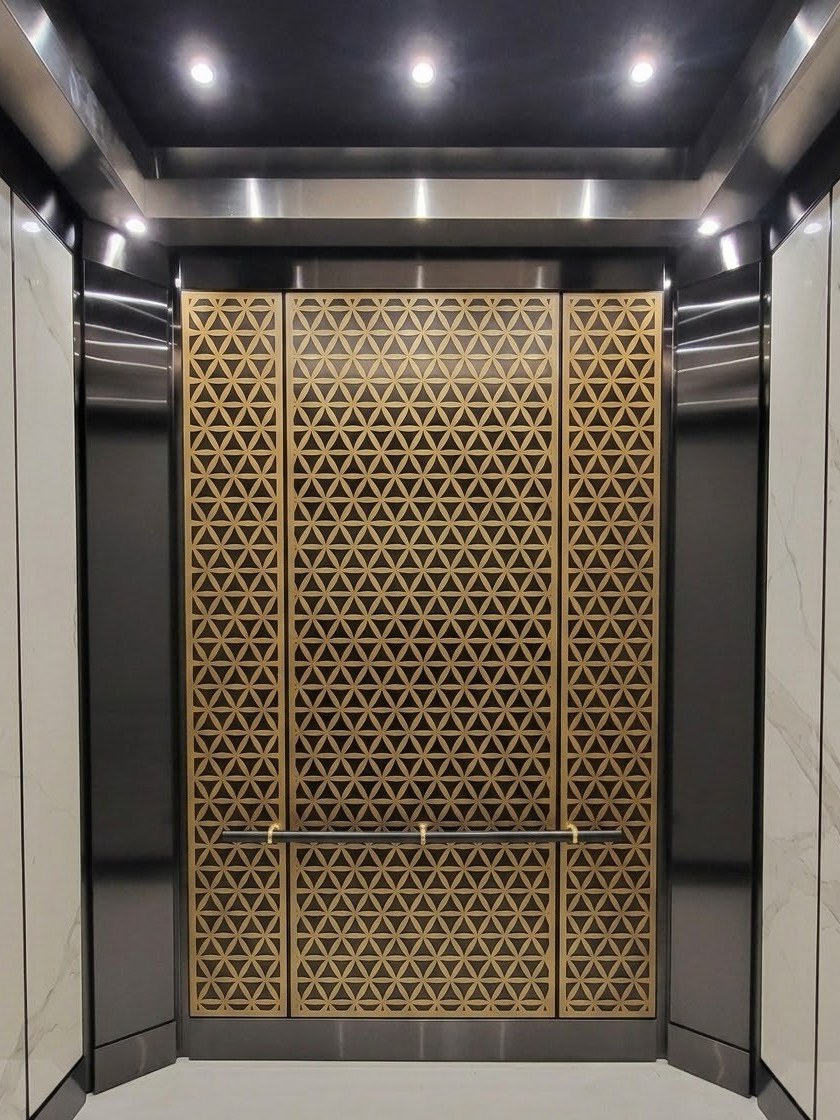
Metals
Stainless steel routine cleaning
- Use a soft microfiber cloth dampened with warm water, and a mild soap or detergent for daily dust removal.
- Always wipe in the direction of the grain or texture pattern — never against it.
- Clean any excess soap or detergent from the stainless steel using clean water.
- Dry the stainless using a soft lint-free cloth or paper towel to leave a streak-free finish.
- For fingerprints and smudges, apply a small amount of stainless steel cleaner or a dedicated metal cleaner with a soft cloth.
Recommended general cleaners: Weiman Stainless Steel Cleaner, Sheila Shine, Windex Ammonia-Free, liquid dish soap
For light surface scratches, consult your cab manufacturer before attempting any repair — improper buffing can worsen appearance.
Bronze & specialty finish cleaning
- Regularly dust the lacquered surface with a soft, lint-free cloth or natural feather duster. If dust is allowed to settle and sit, it can act like sandpaper and scratch the lacquer.
- For smudges and fingerprints, apply a mild soap and warm water mixture to a clean, soft microfiber cloth.
- Gently wipe the surface in the direction of the grain.
- Immediately dry the surface with a clean microfiber cloth.
✓ Recommended
- Wipe in the direction of the grain or texture
- Use metal-specific cleaners
- Apply a light protective polish monthly
- Dry surfaces immediately after cleaning
- Use soft microfiber cloths only
✕ Avoid
- Abrasive scrubbers or steel wool
- Bleach, chlorine, or ammonia-based cleaners
- Wiping against the grain or texture
- Moisture left at panel edges or joints
- Generic metal polish on specialty finishes
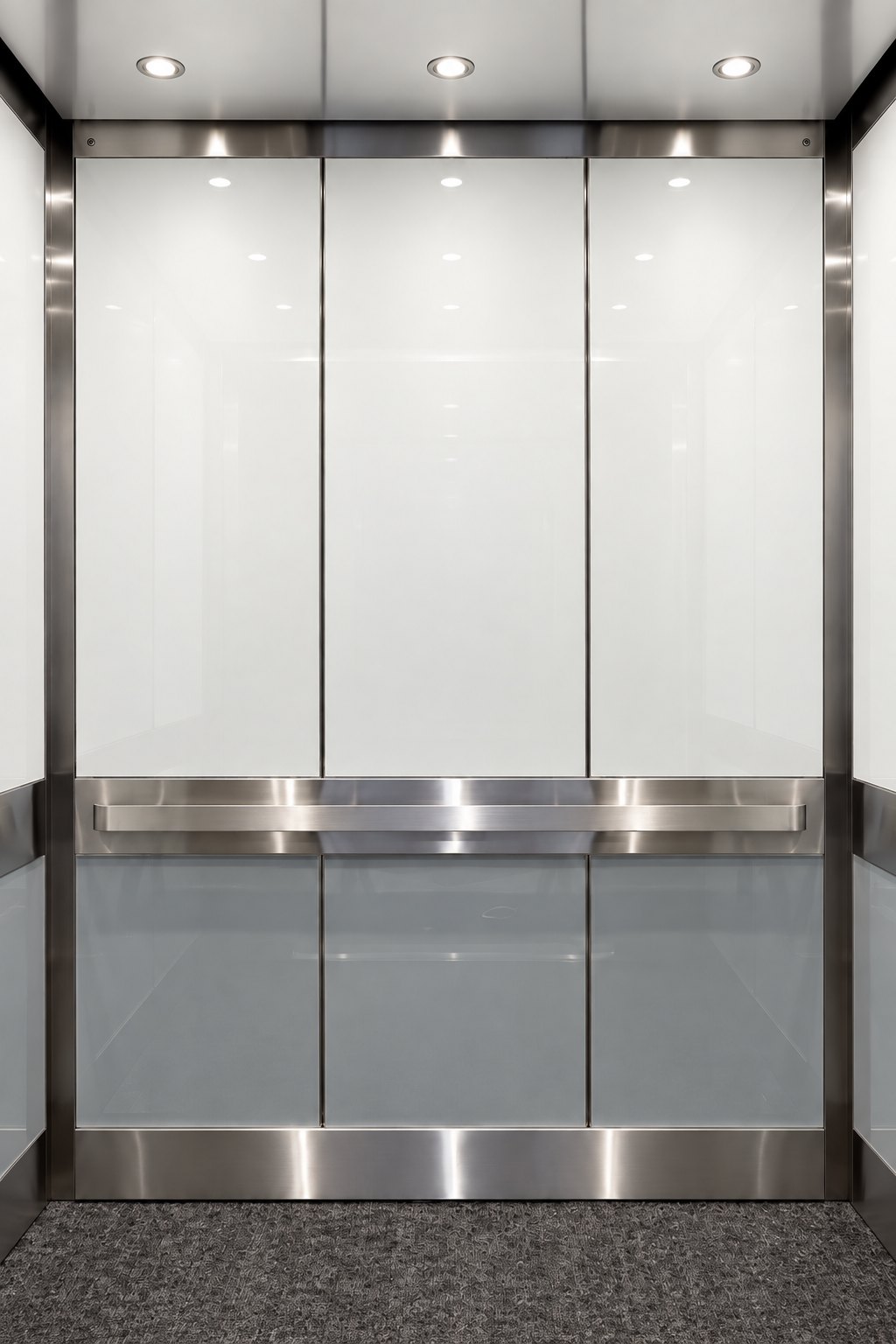
Glass & Mirror
Routine cleaning
- Use a mild soap, detergent, or ammonia-free glass cleaner.
- Apply the solution using a clean, soft, grit-free cloth or paper towel. Wipe in overlapping circular or S-pattern strokes to avoid streaking.
- Immediately following the application of the cleaning solution, use a lint-free microfiber cloth, squeegee, or paper towel to remove any remaining solution. Ensure all water has been removed from the face of the panel and around the panel frames.
Recommended general cleaners: Windex Ammonia-Free, liquid dish soap, any ammonia-free glass cleaner
Removing stubborn residue
- For adhesive or sticker residue, use isopropyl alcohol applied with a soft cloth.
- A Mr. Clean Magic Eraser can also be used with light pressure.
- For mineral deposits or hard-water spots, use a diluted white vinegar solution (1:1 with water) on plain glass panels only.
- Never use razors or metal scrapers on mirror surfaces or coated glass.
✓ Recommended
- Use ammonia-free glass cleaner
- Apply cleaner to the cloth, not directly to the glass
- Use lint-free microfiber cloths
- Inspect edges and seals regularly
- Address chips or cracks immediately
✕ Avoid
- Ammonia-based cleaners on coated glass
- Spraying cleaner directly onto mirror surfaces
- Abrasive pads or metal scrapers
- Pressure near glass panel edges
- Ignoring chips, cracks, or loose panel hardware
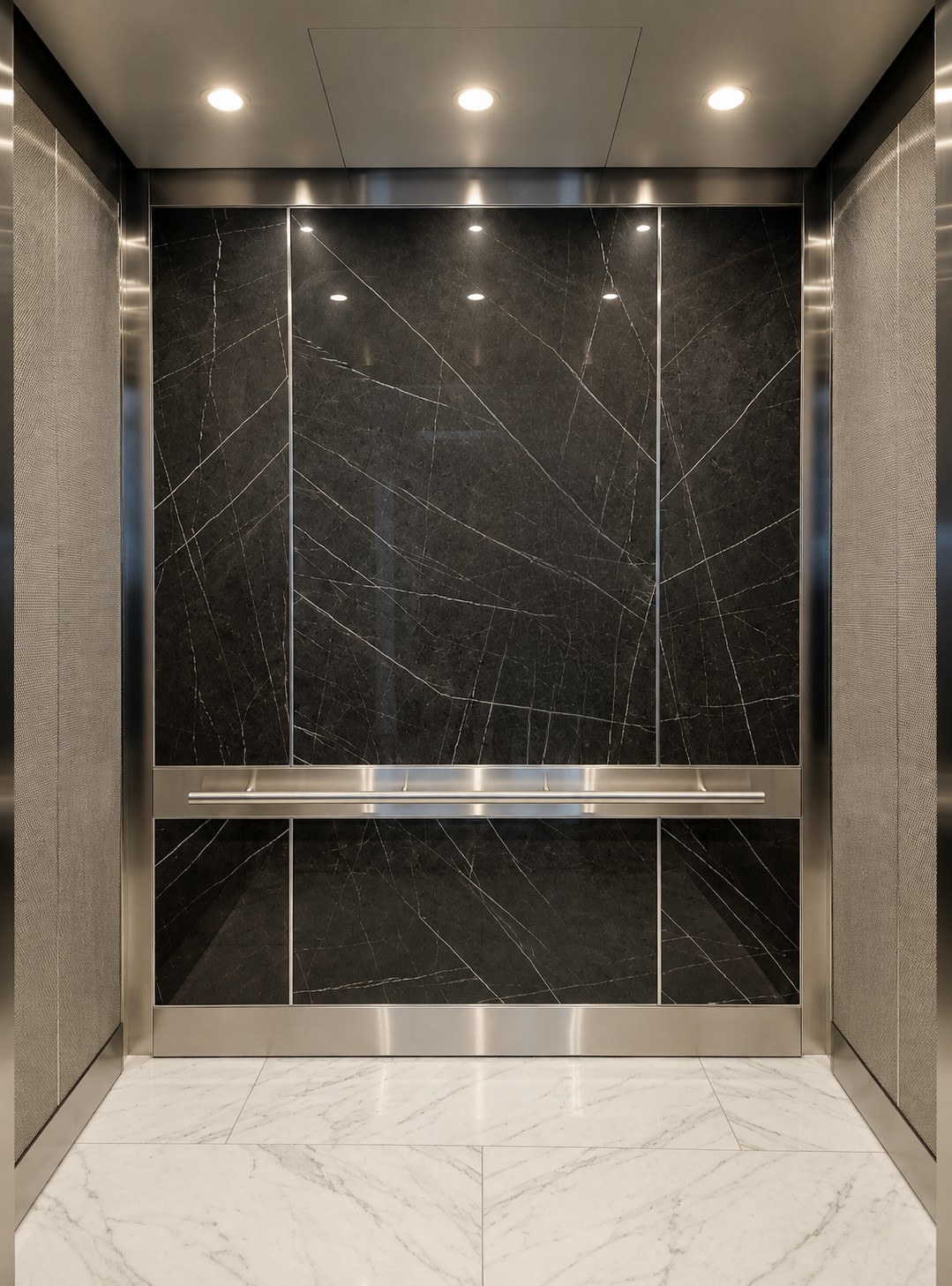
Stone & Porcelain
Natural stone — routine cleaning
- Removing dust and debris:
- Use a clean dry microfiber cloth, soft duster, or vacuum with a soft brush attachment to prevent dirt buildup in joints, corners, and textured areas.
- Cleaning:
- Use a clean damp soft cloth or sponge with warm water and a neutral-pH stone cleaner. Rinse thoroughly to remove all cleaner residue with clean water and ensure panels are wiped dry immediately after.
Porcelain — routine cleaning
- Removing dust and debris:
- Glazed and polished panels: use a clean dry microfiber cloth for light dusting. A damp microfiber cloth can be used for removing fingerprints and smudges. Wipe dry immediately.
- Matte and textured panels: use a clean cloth, soft brush, or vacuum with a soft brush attachment. For textured surfaces, a soft-bristle brush can be used to help remove dirt from low spots and grooves.
- Cleaning fingerprints and smudges:
- Use a clean damp microfiber cloth or sponge with warm water and a neutral-pH cleaner or mild soap. Avoid oversaturating the tile. Rinse thoroughly to remove all cleaner residue with clean water and ensure panels are wiped dry immediately after.
✓ Recommended
- Use pH-neutral cleaners for routine cleaning
- Rinse thoroughly after any stain treatment
- Wipe dry immediately after cleaning
✕ Avoid
- Acidic, oil- or solvent-based cleaners
- Abrasive pads or powders
- Water left to sit at panel seams or edges
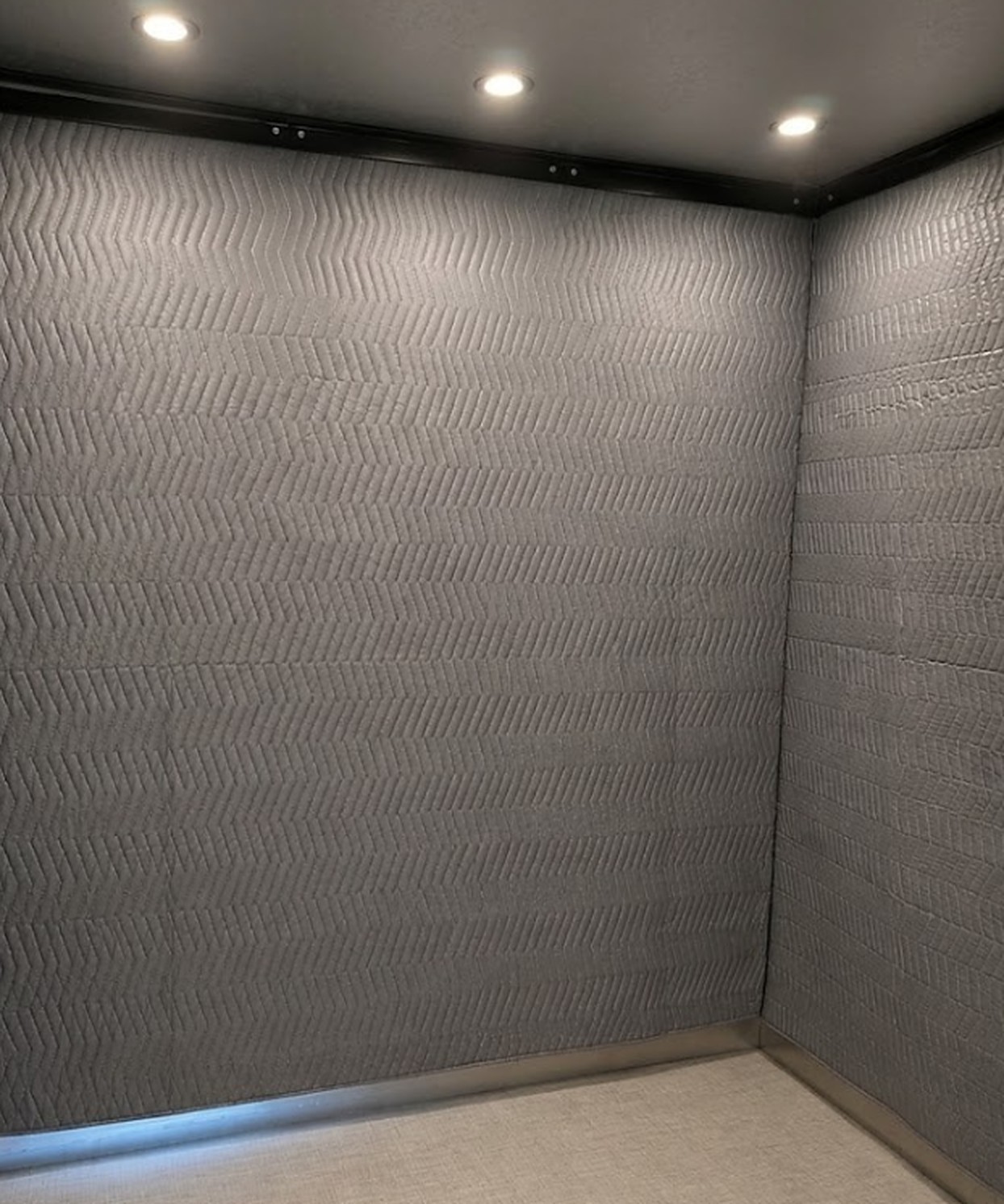
Protection Pads
Installing protection pads
- Hang pads by attaching the black stud strip on the protection pad to the metal pad studs on the cab wall, ensuring all wall surfaces are covered when in use.
Cleaning & care of vinyl pads
- Shake out pads after each use to remove loose debris.
- Spot clean vinyl pads with a mild dish detergent and a clean damp cloth. Rinse the pad with water and wipe dry.
- Do not store wet or damp pads — mildew will develop and can transfer odors or staining to the cab interior.
Rugged canvas pads cannot be cleaned.
Inspection & storage
- Inspect pads monthly for tears, fraying, missing hooks, or hardware damage.
- Store pads folded or rolled in a clean, dry storage area when not in use.
- Replace pads that are heavily soiled, torn, or no longer provide adequate surface protection.
✓ Recommended
- Cover all wall surfaces before use
- Store pads clean and fully dry
- Replace damaged or worn pads promptly
✕ Avoid
- Storing wet or damp pads
- Ignoring fraying or missing hardware
- Applying weight to pads while in use — large amounts of tension can damage pads and pad studs
Recommended maintenance schedule
The following schedule provides minimum recommended maintenance intervals. High-traffic locations may require more frequent attention. Always document all maintenance activities in your building's elevator service log.
| Surface / component | Task | Weekly | Monthly | Quarterly |
|---|---|---|---|---|
| Laminates | Wipe down surfaces | ● | ||
| Laminate edges & seams | Inspect | ● | ||
| Metals | Wipe & remove fingerprints | ● | ||
| Textured metals | Dust & wipe down surfaces | ● | ||
| Metal edges & seams | Inspect | ● | ||
| Glass | Wipe & remove fingerprints | ● | ||
| Glass edges & seams | Inspect frames & face | ● | ||
| Stone / tile panels | Dust & wipe down surfaces | ● | ||
| Stone / tile floors | Sweep & damp mop | ● | ||
| Protection pads | Inspect & wipe down | ● | ||
| All surfaces | Full inspection & documentation | ● |
Not sure how to treat a surface? Ask us before you clean it.
Send a photo of the panel and we will tell you what it is and how to care for it.